
A key factor that determines the quality, lifespan, and visual effect of these neon strips is the neon light cover material. Silicone and PVC are now the two main options on the market. Each has its own strengths and works best in different situations. This article will give you a clear, detailed comparison of the two materials and how they perform in neon lighting applications.
Neon Light Cover Material Characteristic
Common Characteristics of Neon Light Cover
Even though silicone and PVC are chemically very different, in neon light strip applications, they both provide these basic functions:
- Light diffusion: They transform point-like LED light sources into a continuous, uniform line of light.
- Physical protection: They covers shield the internal LEDs and circuits from mechanical damage.
- Electrical insulation and safety: They provide insulation to ensure safe operation.
- Water and dust resistance: Each material blocks moisture and dust from entering to varying degrees, which helps protect the internal components.
Distinguishing Characteristics of Neon Light Cover
Silicone Characteristics
- Its chemical structure is an organic silicone polymer.
- It performs reliably across an extremely wide temperature range, from -60°C to 200°C(-70°F to 390°F).
- It offers excellent softness and elasticity while maintaining a low permanent deformation rate.
- It is highly chemically inert, providing strong resistance to UV rays, ozone, and aging.
- It achieves a light transmittance of over 90%, resulting in a soft and uniform light output.
- It is an environmentally friendly and non-toxic material that meets food-grade safety standards.
- Its chemical structure is a polyvinyl chloride (PVC) polymer.
- It has a limited functional temperature range, typically from -10°C to 60°C(14°F to 140°F).
- It is available in a wide range of hardness levels, from very soft to rigid.
- It is a low-cost material with good processing properties for manufacturing.
- Standard PVC has moderate weatherability and tends to degrade with prolonged outdoor exposure
Advantages and Disadvantages of Neon Light Cover Materials
Different Neon Light Cover: Advantages
Advantages of Silicone Neon Light Cover
1. Outstanding Weather Resistance
- It maintains stable performance across extreme temperature changes, from freezing winters to hot summers.
- It strongly resists UV radiation and does not crack during long-term outdoor use.
- It suits various climate conditions worldwide for reliable outdoor applications.
2. Excellent Optical Performance
- Its high light transmittance and superior diffusion create an authentic “neon effect.”
- It produces uniform and soft light, minimizing visible spotting or dark areas.
- It offers high color fidelity, closely matching the original LED light color.
3. Extended Service Life
- Its theoretical lifespan is 2-3 times longer than that of PVC.
- It strongly resists aging and retains flexibility over time.
- It withstands ozone corrosion, making it suitable for harsh environments like industrial areas.
4. Superior Safety Performance
- It achieves a high flame-retardant rating.
- It does not release toxic gases in high-temperature environments.
- It provides stable and reliable electrical insulation.
5. Environmental and Health Safety
- It has no plasticizer migration issues.
- Its production and usage processes are environmentally friendly.
6. Installation Adaptability
- It is extremely flexible.
- It fits complex curves and custom-shaped installations.
- Its low thermal expansion coefficient ensures excellent dimensional stability.
Advantages of PVC Neon Light Cover
1. Excellent Cost-Effectiveness
- The material cost is low.
- Its extrusion process is simple, enabling high production efficiency.
- The final product price is affordable, resulting in high market acceptance.
2. Good Mechanical Performance
- It offers high tensile strength and good wear resistance.
- Its puncture resistance is superior to that of silicone.
- It can be enhanced with various functional additives.
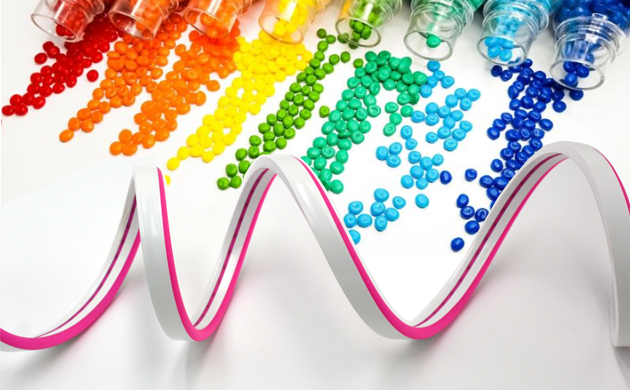
- The base PVC particles are naturally colored, producing vibrant hues.
3. Installation Convenience
- It can be directly installed using standard adhesives.
- Its lightweight nature reduces the load on mounting structures.
Different Neon Light Cover: Disadvantages
Disadvantages of Silicone Neon Light Cover
1. High Cost
- The material cost is 3-5 times higher than that of PVC.
- The production process is complex and requires significant investment in equipment.
- The final product price is significantly higher than that of PVC neon light strips.
2. Surface Properties
- The surface is relatively smooth, requiring specialized primers for pretreatment before using adhesives during neon sign installation.
- It tends to attract dust easily, though it cleans easily.
- Its scratch resistance is generally moderate.
- Its color saturation is not as vibrant as that of PVC.
Disadvantages of PVC Neon Light Cover
1. Limited Weather Resistance
- It becomes brittle easily with prolonged outdoor use.
- It softens and deforms easily at high temperatures.
- It becomes hard and brittle at low temperatures.
- It is not suitable for high-UV regions or long-term outdoor applications.
2. Environmental and Health Concerns
- It may contain plasticizers such as phthalates.
- It releases toxic gases like hydrogen chloride when burned.
- Its recycling and disposal process after use is relatively complex.
3. Limitations in Optical Performance
- Its light transmittance and diffusion are inferior to silicone.
- The uniformity of its light output is relatively poor.
Conclusion
As a factory with years of experience in neon light manufacturing, we understand how important material selection is for product performance. Above, we analyzed the differences between silicone and PVC as neon light cover materials for neon light strips. These differences matter most to our customers and determine which product suits their specific needs best.
Overall, based on feedback from production and real-world projects, here’s what we always recommend:
For outdoor projects, we recommend silicone neon strip products first.
- Its excellent weather resistance, UV protection, and long-term reliability help it withstand sun, rain, and temperature changes. Silicone ensures lasting brightness, safety, and cost-effectiveness over time.
For indoor projects, it depends on your needs.
- If you require very even light, accurate color rendering, or if the space has changing humidity (like kitchens or bathrooms), silicone is still the better choice.
- For indoor signs and commercial spaces where bright, lasting colors matter most, PVC covers often work better. Their pre-colored manufacturing gives rich, vibrant looks, and the colors stay true longer.
- If you have a limited budget or are installing in a stable indoor environment, PVC is also a practical and economical option.
We believe that choosing the right material makes your project successful. Feel free to reach out and discuss your specific needs. We’re here to help you find the best neon light product for your situation.
* For more relative article, please click Is PVC Neon Light Cover Really Inferior to Silicone Neon Light Cover? You Might Be Mistaken!
Call to Action
As a professional manufacturer with 8 years of deep expertise in the neon lighting industry, One Zero LED Lighting Factory is committed to providing a full range of high-quality neon lighting products.
- Equipped with 6 specialized production lines and comprehensive in-house capabilities from R&D to manufacturing, we can flexibly meet the needs of diverse projects.
- Maintain substantial ready-to-ship inventory across our entire advertising neon light series, enabling fast dispatch within 3–7 days for small to medium orders. This ensures efficient support for urgent projects and allows your plans to proceed with confidence.
Let’s work together to illuminate spaces, ideas, and opportunities with professional products and service.
Contact us today to bring your vision to light.
Email Us: sales@onezeroledlighting.com
Call Us (Phone/WhatsAPP/WeChat): +86 18692631217