
Have you ever faced this problem? You deliver a high-quality outdoor neon sign, but it starts to flicker or fails completely after a few heavy rains. Perhaps you are even losing high-profit outdoor orders because you worry about frequent repairs and after-sales issues. As a neon sign manufacturer, learning how to waterproof neon light cut ends effectively is now essential. It is the key to protecting your reputation and growing your business.
In this article, we will show you how to effectively waterproof neon light cut ends through 2 selections and 4 easy steps.
1. Choosing the Right Neon Structure and Materials
In the neon sign industry, waterproofing is a constant challenge. Many people believe that to waterproof neon light cut ends simply means “to apply more glue,” but this is far from the truth. Long-lasting protection starts with understanding the product structure and choosing the right materials.
Before we dive into the “4 Steps to Waterproof Neon Light Cut Ends,” we need to examine the different types of neon light products on the market. This will help you avoid common mistakes right from the start.
1.1 Understand the Differences in Neon Structures
1.1.1 There are 2 main types of advertising neon lights on the market:
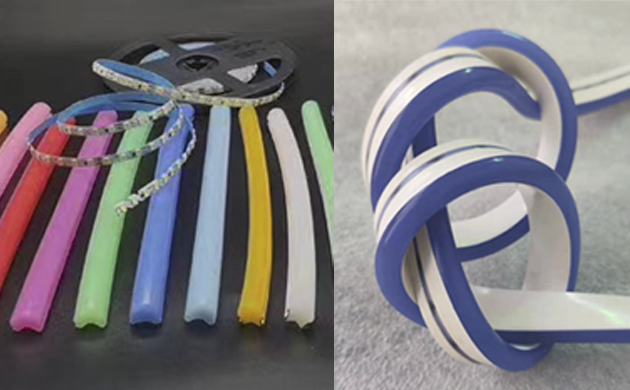
Integrated Extruded Neon (The focus of this guide): This type of neon strip is produced using large-scale extrusion equipment. The LED strip and the protective material (Silicone or PVC) are molded into a single piece. It acts like a solid cable, with the LED strip tightly sealed inside the protective layer.
-
- Common Sizes: Such as the standard 6mm*12mm and 8mm*16mm. (All neon light waterproofing instructions in this article are specifically designed for Integrated Extruded 6mm*12mm Neon light.)
- Waterproof Advantage: Since the main body has no gaps, the only way water can enter is through the “cut ends.” This is why mastering the “4 Steps to Waterproof Neon Light Cut Ends” is enough to achieve high-performance waterproofing.
Separate Component Neon: This type consists of two parts: a semi-circular neon cover and an IP20 S-shaped LED flexible strip. During assembly, the LED strip is manually attached to the base, and then the silicone cover is placed on top.
1.1.2 Comparison and Identification
If you want to learn more about the differences in lighting effects, installation costs, and durability between these two types, please refer to our previous in-depth article.
1.2 Choosing the Right Housing Material of Neon Light
If the structure is the skeleton, the material is the “skin” of the neon light. The two most common housing materials today are PVC and Silicone. While they may look similar, their performance in outdoor environments is completely different.
For outdoor use, integrated extruded neon lights must use silicone housing to ensure weather resistance and flexibility. For more details on why this is necessary, please refer to our dedicated article on this topic.
1.3 Common Traps and Misconceptions in Neon Selection
1.3.1 The “Laboratory Trap” of PVC Materials
Many manufacturers use IP65 certification reports to claim that PVC neon strips have excellent waterproof performance. However, laboratory data often fails to simulate real-world outdoor environments.
-
- The 8-Year Real-World Truth: Based on our 8 years of production, sales, and outdoor testing, we have found that PVC contains a large amount of “plasticizers.” Under UV exposure and temperature changes, these plasticizers gradually migrate and evaporate, causing the PVC to harden, turn yellow, and become brittle.
- Cracking Risks: For flexible PVC, flexibility primarily depends on the addition of plasticizers. According to engineering reviews on ScienceDirect, high outdoor temperatures significantly accelerate the migration of plasticizers to the material’s surface. These plasticizers are subsequently lost through volatilization or rainwash. As noted in research on ResearchGate, once plasticizers are depleted, the spacing between PVC molecular chains narrows, leading to significant volumetric shrinkage. The internal stress generated by this shrinkage is the primary cause of macroscopic cracking. Once these cracks appear, the IP65 rating becomes useless. Water enters the neon strip through the cracks, leading to total product failure.
1.3.2 Deceptive Names for Housing Materials
-
- Silicone+PVC Blends: It is impossible to mix PVC and silicone for high-temperature extrusion. Therefore, “Silicone+PVC blend” housing does not exist. We won’t get into those details here, as we’ve already covered it comprehensively in our article about neon light cover materials.
- Imitation silicone Materials: These are usually modified TPE or soft PVC. While they feel similar to silicone, their actual performance is entirely different.
1.4 How to Identify Real Silicone?
The most effective and easiest method is the Burn Test. Take a small piece of scrap material and light it with a butane lighter.
Note: Do not use liquid fuel lighters (like Zippos), as they often cause incomplete combustion. This produces tiny carbon particles (black smoke), which will interfere with your judgment.
- Real Silicone: Produces white smoke when burning, and the residue is a white, powdery ash.
- PVC or Fake Materials: Produce black smoke and a pungent odor. The residue is a black, charred solid.
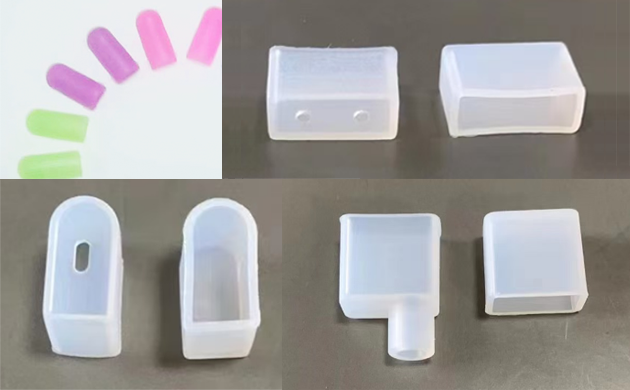
2. Selecting the Right Waterproofing End Cap
In this article, we will use a one-piece extruded advertising 6mm*12mm neon light as an example. We aim to create an effective waterproof seal for the cut ends, a common need in many commercial neon sign applications. For this purpose, we will use a square silicone waterproof end cap to waterproof neon light cut ends.
If you would like to know about the general types of end caps available for one-piece advertising neon lights, and which type is suitable for which scenario, please refer to the relevant specialized article. What Types of Neon Light End Caps Are Available for One-Piece Neon Lights, and How Do You Choose the Right One for Different Environments?
3. Only 4 Steps to Waterproof Neon Light Cut Ends
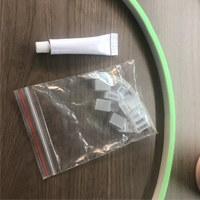
Step 1: Material Preparation For Waterproof Neon Light Cut Ends
- Square silicone end caps, both with holes and without holes.
- Neutral silicone sealant for end caps.
- A one-piece extruded silicone 6mm*12mm neon light strip.
- AWG27 transparent purple copper wires.
*Our factory supplies all the above neon lights and accessories. Click here to contact us.*
Step 2: Surface Preparation For Waterproof Neon Light Cut Ends
First, make sure the cut end of the neon light strip is flat and smooth. Then, clean the surface with alcohol to remove any oil or dust.
Step 3: Sealing Process For Waterproof Neon Light Cut Ends
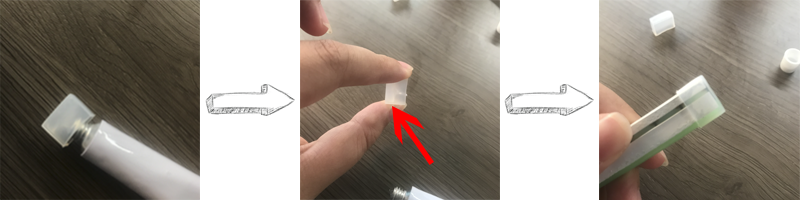
- For the neon light tail end without wires:
-
- Apply neutral waterproof silicone sealant evenly into the closed square end cap (Picture 1 Above). Fill about 1/3 to 1/4 of the cap’s volume (Picture 2 Above).
- Next, insert the tail end of the neon light strip into the cap (Picture 3 Above). Press firmly until the sealant overflows slightly around the strip’s outer cover.
- For the Neon Light Tail end with wires:
-
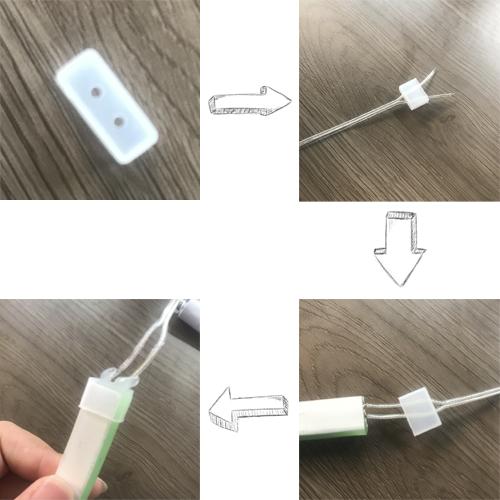
- First, pass the two transparent wires through the two holes of the square end cap (from Picture 1 to Picture 2). Pay attention to the cap’s direction: The plug-hole side corresponds to the side where wires are merged (left of Picture 2), and the plug-opening side corresponds to where wires are separated (right of Picture 2).
- Then, connect the two wires to the positive and negative terminals of the 6mm*12mm neon light strip (Picture 3). Test the strip to ensure it lights up properly.
- Apply neutral waterproof silicone sealant evenly into this end cap. Again, fill about 1/3 to 1/4 of its volume.
- Finally, insert the wired end of the 6mm*12mm neon light strip into the cap (Picture 4). Press firmly until the sealant overflows around both the strip’s cover and the wire holes.
Step 4: Curing and Inspection
Let the assembly sit undisturbed until the sealant is completely cured. After curing, perform a water immersion or spray test to verify the waterproof result. Proceed with installation only after confirming there are no leaks.
4. Conclusion
By carefully selecting real silicone neon light materials, matching the right silicone square end caps, and following proper installation steps, you can greatly improve the performance of waterproof neon light cut ends and service life of one-piece extruded neon lights in outdoor settings.
As always, if you have questions, doubts, or queries, we’re here to help. No matter how small your issue is, send us an email or message, and an expert from our support team will reach out to help as soon as possible.
5. Call to Action
As a professional manufacturer with 8 years of deep expertise in the neon lighting industry, One Zero LED Lighting Factory is committed to providing a full range of high-quality advertising LED neon flex lighting products.
- Equipped with 6 specialized production lines and comprehensive in-house capabilities from R&D to manufacturing, we can flexibly meet the needs of diverse projects.
- Maintain substantial ready-to-ship inventory across our entire advertising neon light series, enabling fast dispatch within 3–7 days for small to medium orders. This ensures efficient support for urgent projects and allows your plans to proceed with confidence.
Let’s work together to illuminate spaces, ideas, and opportunities with professional products and service.
Contact us today to bring your vision to light.
Email Us: sales@onezeroledlighting.com
Call Us (Phone/WhatsAPP/WeChat): +86 18692631217