Quick Summary: This technical guide provides LED neon flex wholesalers and manufacturers with a comprehensive analysis of PVC, PU, and silicone casing materials. It details critical differences in UV resistance, thermal stability, and optical performance, offering an identification guide and a decision matrix for various project environments. Essential for selecting high-performance materials that ensure long-term durability and brand reputation in architectural and advertising applications.
LED Neon Flex is a transformative linear light source in modern lighting engineering. It uses semiconductor technology to simulate the visual effect of traditional glass neon lights. It overcomes the weaknesses of traditional lamps, such as fragility, high voltage risks, and complex installation.
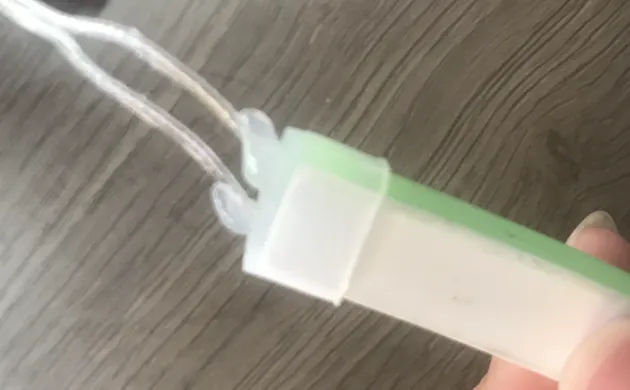
In a LED neon strip system, the “neon flex outer skin materials” (also called neon flex casing materials, neon flex encapsulation materials, neon flex housing materials, or neon flex jacket materials) serves two vital roles:
- Physical Protection: It acts as a barrier, protectingthe internal LED chips and the Flexible Printed Circuit (FPC) from harsh environments like water, UV radiation, and mechanical impact.
- Optical Control: It uses polymer formulas to convert discrete LED light points into a uniform, soft, and shadowless linear light output.
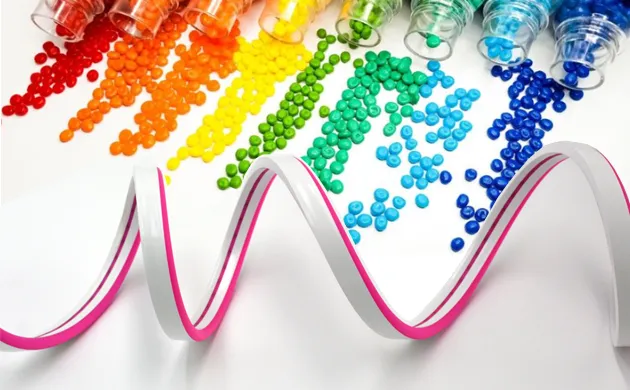
The choice of neon flex outer skin materials determines weather resistance, optical efficiency, flexibility, and life-cycle costs. The global market mainly uses 3 main polymers as neon flex casing materials: Polyvinyl Chloride (PVC), Polyurethane (PU), and Silicone. With the increasing demands for light quality from architectural lighting, commercial lighting, and art installations, research on neon flex outer skin materials has expanded from basic dust and water resistance to cutting-edge fields such as molecular-level UV aging resistance research, high refractive index optical control, and antistatic surface modification.
Table Of Contents
1. Physical and Chemical Properties of 3 Main Neon Flex Encapsulation Materials
1.1 Polyvinyl Chloride (PVC): The Economic Solution
PVC was the most widely used material in the early stages of flexible lighting. It is a thermoplastic that contains chlorine. Manufacturers add plasticizers (like phthalates) to make it flexible at room temperature.
Performance Characteristics:
- Flexibility & Temperature: High-end PVC composites used in flexible light strips can match the flexibility of silicone. However, they have strict temperature requirements and must stay at normal indoor temperatures to maintain this flexibility.
- Molding & Cost: PVC offers excellent moldability and a lower cost. This makes it the preferred material for projects with a limited budget.
- Surface Properties & Contamination: PVC is a non-porous material. Unlike a “vacuum cleaner,” it does not absorb or accumulate particles and odor molecules. Therefore, indoor pollutants (such as formaldehyde, benzene, and TVOCs) will not cause significant color changes in high-quality PVC.
- Thermal Stability: PVC has a narrow temperature range, typically between -10°C and 60° In cold environments, the plasticizer inside the material migrates, causing the outer shell to become hard, brittle, and prone to cracking. In high-temperature environments, the material softens significantly.
- Yellowing & Aging: PVC is extremely sensitive to UV rays. Under direct sunlight, its molecular chains undergo a dehydrochlorination reaction. This causes the material to fade quickly and turn from transparent to brownish-yellow, which seriously affects the accuracy of the color temperature.
- Environmental Hazards: PVC contains halogens. In a fire, it releases thick black smoke and corrosive hydrogen chloride (HCl) gas. This gas dissolves easily in water. Once in the atmosphere, it combines with water vapor to form acid rain, lowering the pH level (increasing acidity) of soil and water.
1.2 Polyurethane (PU): Mechanical Strength and High Transparency
PU encapsulation usually combines a TPU (Thermoplastic Polyurethane) U-channel with potting-grade PU glue.
Performance Characteristics:
- Toughness: PU has higher mechanical strength than silicone. Its tensile strength and abrasion resistance make it ideal for public areas or in-ground installations.
- Optics: PU light transmission can reach 90%. It provides very bright and sharp visual effects.
- Weaknesses: PU can suffer from delamination between the shell and glue during thermal shock tests. Its yellowing risk under long-term UV exposure is still higher than silicone.
1.3 Silicone: The Gold Standard for Architectural Lighting
Silicone is a semi-inorganic and semi-organic polymer.. It uses Silicon-Oxygen (Si-O) bonds as its main chain, which provides a qualitative leap in weather resistance. The Si-O bond energy (approx. 452 kJ/mol) is much higher than Carbon-Carbon bonds, which endows it with extremely strong resistance to photo-oxidation and thermal degradation. Commercially available silicone can be broadly classified into: General Purpose Silicone, High Consistency Rubber (Fumed Silicone), and Dow Corning silicone.
In top-tier projects (such as the exterior walls of five-star hotels, cross-sea bridges, and polar research stations), silicone is the only material recommended for long-term application.
Performance Characteristics:
- Temperature Range: Silicone remains elastic between -40°C and 220° It does not crack in extreme cold or decompose in high heat.
- UV Stability: Silicone is naturally resistant to UV. It does not yellow easily.
- Safety: In fire tests, silicone produces only white silica residue. It does not produce black smoke or toxic gases.
1.4 Property Summary Table Of Neon Flex Outer Skin Materials
| Feature | Polyvinyl Chloride (PVC) | Polyurethane (PU) | Silicone |
|---|---|---|---|
| Material Cost | Lowest | Medium | Highest |
| Operating Temperature | -5℃ ~ 60℃ Not suitable for extreme conditions | -25℃ ~ 50℃ Good low-temperature performance, but limited heat resistance. | -40℃ ~ 200℃ High-quality Dow Corning silicone can even withstand temperatures up to 232℃. |
| Light Transmission | 50% ~ 60% | 80% ~ 90% | 60% ~ 80% |
| UV Resistance | Poor | Average | Excellent |
| Flexibility | The flexibility is fair, and once enhanced, PVC can even match the performance of silicone. However, it remains highly temperature-sensitive. | Excellent flexibility with outstanding bending performance. | Superior flexibility; can be formed into intricate shapes with no risk of cracking or loss of integrity. |
| Weather Resistance | Offers a degree of rain and dust resistance, but is not suitable for prolonged outdoor use. | Performs exceptionally in harsh weather with outstanding dust and water resistance (IP68). However, it is UV-sensitive and not suitable for prolonged outdoor use. | Excellent UV resistance and durability under extreme temperatures. Highly durable for long-term outdoor applications. |
| Chemical Resistance | Excellent UV resistance and durability under extreme temperatures. Highly durable for long-term outdoor applications. | Good resistance to oils and solvents, and high corrosion resistance. However, it is susceptible to UV degradation. | Standard silicone offers moderate resistance and may degrade when exposed to strong solvents or oils. In contrast, Dow Corning silicone exhibits superior resistance to salt, weak acids/alkalis, and chlorination. |
| Waterproofing | IP65-rated for moderate protection. Please note that long-term high humidity can degrade the material and compromise its ingress protection. | IP67 or IP68 rated. Ideal for long-term immersion in water (up to 3 meters). However, it is UV-sensitive; PU materials without UV stabilizers are not suitable for prolonged outdoor use. | IP65 or IP67 rated. Excellent moisture resistance with reliable performance in humid environments; flexible and durable. Dow Corning silicone even supports short-term immersion (up to 1 meter). |
| Environmental Safety | Halogenated material; does not meet environmental sustainability standards. | Contains VOCs and is not fully compliant with environmental standards. | Toxic-free, Odor-free, Environmentally friendly. |
2. Identification Guide For Neon Flex Housing Materials
Upon receiving samples or bulk orders, you can quickly evaluate the quality of the neon flex outer skin materials using the following simple methods:
| Test Method | Polyvinyl Chloride (PVC) | Polyurethane (PU) | Silicone |
|---|---|---|---|
| Smell | Plastic or sharp chlorine smell. | Strong chemical irritation smell. | Almost no smell. |
| Burn Test | Thick black smoke, sharp smell. | Black smoke, sticky residue. | White powdery ash, no black smoke. |
| Feel | Hard; easy to bend only at room temp. | Smooth surface, medium bounce. | Silky feel, very fast bounce back. |
| Freezing Test | Harden, or even become brittle. | Harden, but won’t break. | Still soft and flexible. |
3. Optical Principles and Light Distribution of Different Neon Flex Encapsulation Materials
3.1 Diffusion and Refractive Index Analysis
The optical performance of a neon strip depends on the scattering efficiency of the neon flex casing materials. When light passes between media with different refractive indices, reflection and refraction occur.
Two methods are used in neon flex casing materials to achieve uniform, dot-free illumination:
- Base Material Selection: Polymers with a low refractive index are used. Lower indices help reduce total internal reflection losses at the interface.Most silicone materials have a refractive index around 1.40-1.43, while PU is around 1.50 and PVC is around 1.54.
- Diffusion Agents: For silicone materials, micron-sized silicone spherical particles (usually 1-5μm) are mixed into the transparent skin. When light hits these particles, it undergoes multiple deflections. Research shows that a refractive index differencebetween 0.91-0.97 or 1.03-1.09 provides the best balance of haze and transmission.
3.2 Cross-sectional Shape and Luminous Distribution
The geometry of the neon flex outer skin materials determines the beam angle and light intensity distribution:
- Flat Outer Skin: Provides a 160° beam angle. The light is directional. It is suitable for recessed installation to create clean architectural lines.
- Domed Outer Skin: Uses a curved lens effect to expand the beam angle to 270°. Light spills from the sides to illuminate the mounting surface, creating a 3D effect like traditional neon tubes.
- Circular/360° Outer Skin: Uses specialized technologyto achieve omnidirectional light. It is often used for suspended art installations to look like a glowing “thread”.
3.3 Optical Loss
When designing large-scale lighting, the light attenuation caused by the thickness of the neon flex outer skin materials must be considered. The loss of light as it passes through the encapsulation layer depends on the initial intensity of the LED chip, the optical absorption coefficient of the material, and the thickness of the layer.
Due to a higher concentration of internal impurities, PVC has a larger absorption coefficient. Furthermore, its light transmission efficiency decreases over time as thermal oxidation causes the material to darken. In contrast, the high transparency of PU and silicone materials allows for higher lumen density and superior color rendering at the same power consumption.
4. Environmental Adaptability and Selection
4.1 Underwater and Swimming Pools: Chlorine Resistance and IP68 Waterproofing
Underwater environments present the most rigorous challenges for neon flex encapsulation materials. The neon flex outer skin materials must not only provide a complete moisture barrier but also resist chemical corrosion from chlorine used in pool disinfection or salt in seawater.
In such scenarios, Silicone + TPU encapsulation technology offers an absolute advantage. High-grade silicone, processed via Integrated Extrusion, eliminates gaps between layers to achieve a true IP68 rating. Furthermore, adding an outer layer of high-end TPU provides chemical inertness against chlorine and weak acids/bases, effectively preventing chemical infiltration and internal corrosion.
4.2 Saunas and Extreme Heat: Thermal Stability
In saunas or tropical deserts, temperatures can stay above 80°C.
- PVC Risk: PVC releases phthalate plasticizers at high temperatures, causing the material to harden and smell.
- Silicone Performance: Premium silicone (like Dow SILASTIC™) can handle up to 220°C and maintains a stable Coefficient of Thermal Expansion. This prevents end caps from falling off due to temperature fluctuations.
4.3 Industrial Environments: Chemical Resistance
In gas stations, chemical plants, or coastal piers, neon flex encapsulation materials must withstand corrosion from oils and volatile fuels. PU and silicone materials offer superior oil and industrial solvent resistance compared to PVC, making them the preferred choice for contour lighting in these demanding environments.
5. Advanced Technologies and Trends
5.1 Surface Coating: Silk-Coat and Anti-Static
Silicone naturally carries a negative charge and attracts dust. Leading manufacturers use Silk-coat technology. They spray a sub-micron anti-static coating on the silicone surface. This makes the surface smooth like silk and prevents dust adhesion, reducing maintenance for high-altitude installations.
5.2 Integrated Co-extrusion Process
Old methods used manual tube threading, leaving air gaps that reduce heat dissipation and cause shadows. New “Tri-color” or “Quad-color” co-extrusion bonds the blocking, reflecting, and diffusing layers together. The LED board is sealed tightly inside. This removes thermal resistance and ensures stable operation within enclosed casings without light decay or performance degradation.
5.3 Thermal Management and Long Runs
Since neon flex jacket materials are poor thermal conductors, optimizing thermal management through casing design is critical. Research shows that doping silicone with micronized aluminum oxide or aluminum nitride powders can enhance the thermal conductivity of the neon flex casing materials, thereby reducing internal junction temperatures. Furthermore, utilizing a 4oz or thicker heavy copper FPC, combined with a thermally enhanced casing, allows a 24V strip to support single-ended power runs up to 15 meters without brightness decay.
Note: Regarding the feasibility of bending, a thicker FPC is not always better. An excessively thick FPC increases the risk of component solder joint fractures during bending.
6. Decision Matrix
6.1 Indoor Events & Displays (Lifespan: 1-2 years)
- Recommended Material: PVC.
- Reason:Best cost-efficiency. Since it is used indoors with shorter run times, concerns regarding yellowing or embrittlement are minimal.
6.2 Municipal Landscapes & General Commercial Projects (Lifespan: 2-3 years)
- Recommended Material: PU or Economy-grade Silicone.
- Reason: Provides high light transmission and excellent abrasion resistance, making it ideal for high-traffic areas and floor decorations.
6.3 Landmark Buildings / Luxury Hotels / High-rise Facades (Lifespan: 3-5 years)
- Recommended Material: Premium Organic Silicone (e.g., Dow Corning).
- Reason: Maintenance at height is extremely costly (often requiring rope access or scaffolding). High-weatherability silicone avoids frequent replacements, significantly reducing the Total Lifecycle Cost (TLC).
7. Frequently Asked Questions
- Switch to Co-extrusion Technology: Traditional “manual tube-threading” processes leave air gaps between the LED strip and the casing. This creates heat pockets that accelerate lumen depreciation. One Zero’s Co-extrusion technology ensures the casing and internal components are seamlessly bonded, significantly enhancing heat dissipation and extending the lifespan of the sign.
- Optimize FPC Copper Weight: While 4oz heavy copper paths provide excellent conductivity, they can be prone to cracking if the sign involves extremely tight bends. We recommend using heat-treated, flexible FPCs tailored for complex geometries, ensuring electrical reliability without sacrificing mechanical flexibility.
- Implement Anti-Static Treatment: Silicone materials naturally attract dust, which can ruin the aesthetics of a premium sign over time. Utilizing a anti-static finish reduces dust absorption by over 80%, keeping your products clean and reducing long-term maintenance labor for your clients.
Expert Insight: We provide more than just products; we provide engineering solutions. If you are experiencing frequent after-sales maintenance of LED neon signs, our technical team will analyze your structure and provide a mass-production optimization plan to help you build a more reputable neon brand.
- Olfactory Test: Authentic silicone is virtually odorless. In contrast, PVC often emits a pungent, sharp chemical odor (characteristic of chlorine) when exposed to air or slight heat. Manufacturer’s Note: It is important to note that high-grade Flame Retardant (FR) PVC—such as the material we use, which is synthesized from 100% virgin PVC particles with eco-friendly treatment—emits significantly less odor compared to recycled or low-grade alternatives. The popular FR PVC neon LED light is here, kindly click and check details.
- Resilience & Elasticity Test: Silicone possesses superior elasticity, rebounding instantly without leaving crease marks. PU has a smoother surface with moderate rebound. High-quality PVC can be quite flexible, but it becomes noticeably stiff and brittle in cold environments.
- Freezing Test:Place the test object in the freezer for about 20 minutes, then remove it and check its physical changes.
- Silicone: Still soft and flexible.
- PVC: Harden, or even become brittle.
- PU: Harden, but won’t break.
- Burn Test (Perform in a controlled, safe environment): The test object is placed above a flame and burned for only 0.5-1 minute to determine the result.
- Silicone: Produces white powdery ash when burned, with no black smoke.
- PVC: Generates thick black smoke, a sharp acidic odor, and leaves a hard, charred residue.
- PU: Produces black smoke and leaves a sticky, viscous residue.
Technical Note:
To verify silicone LED neon and ensure an accurate burn test, the choice of fuel is critical. We recommend using a high-purity fuel source, such as refined naphtha (lighter fluid) used in Zippo lighters, or a butane torch.
Standard or low-grade lighters often use unrefined fuels that do not undergo complete combustion. This can produce “soot” (unburned carbon) even when no object is being burned. If a low-quality flame is used to test silicone, a black carbon film may deposit on the surface, which can be misidentified as material degradation. However, unlike PVC or PU, the silicone itself will not melt or deform into a black mass. Using a clean-burning fuel like refined naphtha or butane eliminates this interference, providing a clear and reliable result.
Expert Insight: If you are unable to perform to verify silicone LED neon material these tests in-house, contact us to assist you in establishing strict Quality Control (QC) standards to ensure every meter of lighting meets your brand’s reputation for excellence.
| Comparison | PVC (Polyvinyl Chloride) | PU (Polyurethane) | Silicone (Professional Grade) |
|---|---|---|---|
| Weather Resistance | Poor; prone to UV yellowing | Moderate; requires UV stabilizers | Excellent; naturally UV stable |
| Temperature Range | -5°C to 60°C | -25°C to 50°C | -40°C to 200°C |
| Eco-Friendliness | Contains halogens; non-recyclable | Contains VOCs | Non-toxic; eco-friendly |
| Typical Application | Indoor temporary displays | High-traffic footpaths | Architectural landmarks; underwater |
Expert Recommendation: Considering Total Lifecycle Cost (TLC), Silicone adds significantly more value by eliminating maintenance and replacement costs. For a large-scale outdoor LED neon project, choosing the wrong material can damage your brand reputation. Contact our technical team today for a customized material solution based on your local climate conditions.
8. Conclusion
The LED Neon Flex jacket is a precision component combining material science, optics, and thermal engineering.
- For Designers: Prioritize environment. Silicone+ TPU is the only choice for water, coastal, or arctic sites. Attention should be paid to the cross-sectional geometry of the outer casing, utilizing different light distributions—such as 160° and 270°—to create multi-layered architectural ambiances.
- For Buyers: Do not just compare unit prices. While PVC is inexpensive, the costs associated with engineering reworks and maintenance in extreme climates can be several times higher than the initial procurement cost. Through a simple burn test, different materials on the market can be effectively identified.
In summary, a deep understanding of material properties is more than a technical requirement—it is the key to enhancing project value and brand reputation. Choosing the right neon flex casing materials is akin to providing lighting art with a layer of “Optical Armor” that is both indestructible and eternally brilliant.
Know someone who needs this? Share via:
9. Call to Action
As a professional manufacturer with 8 years of deep expertise in the neon lighting industry, One Zero LED Lighting Factory is committed to providing a full range of high-quality advertising LED neon flex lighting products.
- Equipped with 6 specialized production lines and comprehensive in-house capabilities from R&D to manufacturing, we can flexibly meet the needs of diverse projects.
- Maintain substantial ready-to-ship inventory across our entire advertising neon light series, enabling fast dispatch within 3–7 days for small to medium orders. This ensures efficient support for urgent projects and allows your plans to proceed with confidence.
Let’s work together to illuminate spaces, ideas, and opportunities with professional products and service.