Quick Summary: This comprehensive guide serves as an enterprise-level sourcing and auditing blueprint for large-scale advertising material traders and neon strip e-commerce merchants selecting a right LED neon strip factory. It dissects four critical industry pain points: extended bulk lead times, deficient technical expertise, cross-batch color deviation, and a lack of agile response capacity. To mitigate these risks, the paper establishes three core supplier evaluation pillars: Factory History & Manufacturing Experience, Dedicated Production Capacity (as opposed to gross line count), and Flexible OEM/ODM Customization Capabilities. Using industry leader OneZero as a benchmark case study, the text quantifies the structural supply chain advantages of a specialized manufacturer—including maintaining a defect rate below 0.3%, enabling parallel multi-line execution with built-in rush buffers, securing error-free manual kitting for e-commerce, and delivering advanced parameter tailoring. This framework empowers procurement teams to precisely screen strategic partners and eliminate operational and liability risks.
For large-scale advertising material traders and neon strip e-commerce merchants, selecting the right neon led strip factory is a core benchmark for evaluating the expertise of procurement professionals. This choice not only impacts raw material costs but also directly determines operational communication efficiency, On-Time Delivery Rate (OTDR), and ultimate customer satisfaction.
Table Of Contents
1. Four Major Operational Pain Points for Large-scale Advertising Material Traders
1. Extended Lead Times for Bulk Orders: Capacity and Timeliness Misaligned with Mass Demand
Large-scale advertising material traders place bulk orders with high concentration, often ranging from tens to hundreds of thousands of meters per single order. Consequently, core capacity and throughput speed of the led neon strip manufacturer are paramount. However, a prevalent industry pain point is extended and unstable manufacturing lead times. When a led neon strip manufacturer lacks sufficient in-house production capacity or efficient scheduling, delayed bulk deliveries not only disrupt shipping schedules and transportation, but also severely trigger project postponements and financial claims from downstream clients.
2. Deficient R&D and Technical Expertise: It Difficult to Address Diverse Application Scenarios and Quality Failures
Advertising LED neon lights are widely utilized in outdoor lighting, indoor commercial displays, cultural and creative exhibitions, and other fields. Different application scenarios impose strict, differentiated requirements on products regarding waterproof ratings, cutting length, CRI (Color Rendering Index), brightness and light distribution. If a LED neon strip manufacturer lacks independent R&D capabilities and a professional technical team, they will not only fail to provide scenario-specific customized application solutions but also lack the ability to diagnose and resolve technical malfunctions when quality issues—such as dead LEDs, light decay, or water ingress—occur. Consequently, this makes it difficult for traders to meet the actual operational needs of end-clients.
3. Fluctuations in Color and Quality Consistency: Damaging to Brand Visual Integrity
The advertising industry demands flawless visual presentation, particularly in color fidelity. When large-scale advertising material traders source from multiple vendors or place cross-batch orders with the same factory, they frequently encounter inconsistencies in quality, color temperature, brightness, appearance, and dimensions. Such variations result in noticeable visual defects in final advertising projects, triggering product returns and client trust crises.
4. Lack of Agile Response: Inability to Handle Urgent and Supplementary Orders
Advertising projects, such as major exhibitions or synchronized store openings, are highly time-sensitive, often forcing traders to handle rapid turnaround capabilities for rush orders. However, many factories operate without agile scheduling capacity. When faced with these urgent requests, they fail to dynamically allocate capacity or expedite production, causing traders to lose business opportunities or even lose core clients due to delayed delivery.
To mitigate these operational pain points, we have formulated three essential criteria for evaluating supplier capabilities based on our years of industry experience, empowering procurement professionals to precisely screen potential partners: Factory History & Manufacturing Experience, Dedicated Production Capacity, and OEM/ODM Customization Capability.
2. Criterion 1: Factory History & Manufacturing Experience
The operating history of a led neon strip factory is far from a vanity metric; it directly translates into two indispensable operational advantages: mature production craftsmanship and battle-tested troubleshooting expertise.
2.1 Decades of Dedication = Process Mastery + Ultra-Low Defect Rates + Superior QA
The longer a led neon strip factory focuses on advertising-grade LED neon strip production, the more refined its mastery of craftsmanship details becomes, thereby driving down structural defect rates.
- Uncompromising Batch Consistency
Established led neon strip manufacturers rely on standardized, regimented process workflows and long-term, deeply integrated raw material supply chains. This minimizes variance and ensures that high-volume orders maintain strict consistency across color temperature, appearance, brightness, and dimensions, effectively solving the cross-batch color deviation pain point.
- Mitigating Operational and Liability Risks
Delivering stable, defect-free neon products insulates large-scale advertising material traders and neon strip e-commerce merchants from exorbitant warranty claims, liquidated damages due to project delays, and catastrophic damage to their brand reputation in the end-market.
- The Industry Quality Benchmark
While novice or recently transitioned factories often suffer from a 3% to 5% defect rate during mass production, seasoned manufacturers consistently maintain a rigorous defect rate well below 0.3% across heavy-volume shipments, establishing a benchmark for the industry.
2.2 Hard-Earned Engineering Expertise & Root-Cause Troubleshooting
True manufacturing excellence is forged through rigorous iteration, destructive stress testing, and uncompromising engineering. Partnering with a led neon strip factory that proactively dissects and resolves deep technical bottlenecks means aligned collaboration with a vendor committed to product longevity and full operational accountability.
Case Study: Eradicating Internal FPCB Fractures in 6×12mm Slim Neon Strips
In 2018, during the development of the signature 6×12mm slim neon LED strip, OneZero encountered a critical quality issue during pre-shipment burn-in testing. After being powered on for several hours, the neon strip illuminated normally for the first few meters, but all next following sections abruptly failed.
- The Investigation
OneZero engineering team carefully stripped the neon outer jacket at the fault point and discovered that the internal FPCB (Flexible Printed Circuit Board) had snapped under thermal expansion and mechanical stress.
- The Solution:
Instead of rushing a band-aid fix, OneZero LED neon strip factory dedicated nearly a month to systematically auditing our entire production workflow. Through multi-round stress testing, we re-engineered three core processes:
1.FPCB Splicing Reinforcement: Upgraded splicing joints to a double-layer, high-tensile copper weld, significantly boosting mechanical pulling resistance.
2.Neon Cover Encapsulation Speed Re-calibration: Synchronized extraction speeds and curing oven temperature curves to eliminate thermal shock and residual mechanical stress during silicone encapsulation.
3.Winding & Packaging Optimization: Redesign the packaging direction of the LED strip reel to reduce the tension on the LED FPCB during packaging.
When you choose a LED neon strip manufacturer with the engineering patience, technical competence, and capital willingness to solve deep engineering problems, you gain a strategic partner who protects your business when edge cases arise.
3. Criterion 2: Dedicated Production Capacity
3.1 Why Dedicated Lines Outweigh Total Production Line Count
When assessing the capacity of a LED neon strip factory, relying solely on total gross floor area or aggregate line count can be misleading. Discerning procurement professionals must scrutinize the number of production lines exclusively dedicated to neon LED light strips.
Many consolidated LED manufacturers manage fragmented product portfolios, simultaneously producing IP68 glue-filled strips, COB linear lights, pin-connected high-voltage strips, aluminum profile fixtures, and seasonal festival lights. Because each product category demands vastly different extrusion tech, thermal management, and tooling, factories attempting to produce everything rarely master anything.
Head-to-Head: Generalist Factory A vs Specialist Factory B (OneZero)
| Evaluation Metrics | Factory A (Generalist Manufacturer) | Factory B (OneZero – Specialist) |
|---|---|---|
| Total Lines | 6 Lines | 6 Lines |
| Dedicated Neon Lines | Only 2 Lines (33% of Capacity) | 6 Lines (100% of Capacity) |
| Specialization Focus | Fragmented across different product types | 100% Focused on neon LED strips |
| Troubleshooting Speed | Sluggish. Technicians split focus, lacking niche expertise | Instant. Instant remediation via pre-standardized solutions |
| Capacity Allocation | High risk of line-switching latency and bulk bottlenecks | Parallel order execution with built-in buffer agility |
① The “10,000-Hour Rule” in Industrial Manufacturing: Neutralizing Technical Downtime
Through multi-year singular focus, Factory B continuously refines its niche extrusion processes, material formulations, and quality inspection metrics. While unexpected technical glitches at generalist Factory A often paralyze production for days, Factory B mitigates these volatility risks through standardized preventative protocols and backup configurations—ensuring seamless failover routing even during anomalies.
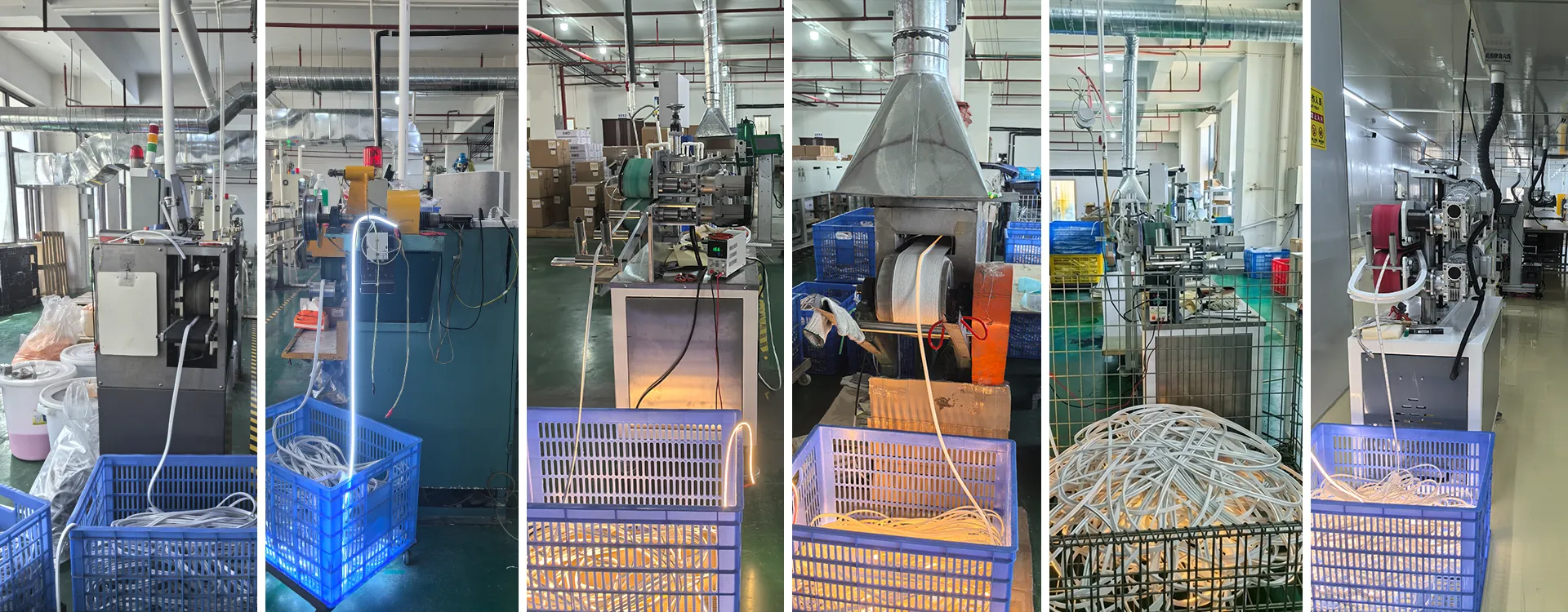
In 2018, OneZero executed a decisive strategic pivot, focus on advertising-grade LED neon light strips (primarily 6mm silicone and 6mm PVC led neon lights engineered explicitly for sign makers). Today, our 6 dedicated neon lines, run under highly standardized SOP workflows, empower us to seamlessly swallow multiple heavy-volume orders concurrently, entirely eliminating line-switching latency.
② Parallel Execution & Operational Buffers: Eradicating Delivery Bottlenecks
Possessing a robust network of dedicated lines yields two critical commercial dividends for major traders:
- Multi-Line Parallel Processing: Guaranteed Lead Times
Possessing 6 network of dedicated production lines allows a factory to process multiple orders concurrently, completely eliminating the need to freeze an ongoing project to bootstrap another. When you place high-volume orders for varying signage projects, different lines can execute production in parallel. This fundamentally neutralizes delivery bottlenecks and lead-time inflation caused by single-line overloading.
- Built-In Operational Capacity: Agility for Urgent Rush Orders
This dedicated production capacity functions as a potent operational buffer, enabling the factory to routinely maintain a “green channel” fallback line for emergency orders. For advertising signage material traders who constantly operate under cut-throat project deadlines and extreme delivery pressure, this flexibility serves as indispensable business insurance.
3.2 Why Dedicated Capacity Is Crucial for High-Volume Distributors & Wholesalers
If you are a large-scale signage material trader, regional exclusive distributor, or professional global importer ordering in volumes ranging from tens to hundreds of thousands of meters per batch, this metric is a make-or-break factor. For high-volume buyers, the number of dedicated neon lines is far from a trivial operational detail. Instead, it is the linchpin that determines whether a manufacturer can swallow and execute massive orders within a highly predictable, rigid timeframe—all while maintaining unwavering quality and preventing catastrophic ripples across your global supply chain.
OneZero’s High-Yield Throughput & Delivery Certainty
At OneZero, our highly vertical and dedicated neon manufacturing infrastructure translates directly into industry-leading high-certainty bulk delivery commitments:
- <50,000 Meters Orders: Efficiently fulfilled within 20 to 30 days.
- ~100,000 Meters Orders: Robustly fulfilled within 30 to 40 days.
For an exact lead-time projection tailored specifically to your exact order volume and customization specifications, feel free to click the WhatsApp icon on the bottom right to connect directly with our engineering experts, or submit an official RFP to our team at sales@onezeroledlighting.com.
Therefore, when auditing and vetting potential LED neon strip manufacturers, it is paramount to prioritize on-site verification of the actual number of production lines exclusively dedicated to advertising-grade neon strips.
3.3 Manual Sorting and Kitting Capacity: A Issue That is Crucial for Neon Strip E-Commerce Merchants
Beyond automated machinery and continuous extrusion lines, another critical yet often overlooked manufacturing segment requires rigorous auditing: the scale and stability of a factory’s manual packaging and sorting workforce. For neon strip e-commerce merchants driving growth across global digital channels, this operational link directly dictates final delivery compliance and store performance health.
This operational metric is exceptionally crucial for neon strip e-commerce merchants, distributors, and multi-channel retailers operating on major global B2C platforms, where maintaining positive review velocity is paramount:
- Amazon (US and European Marketplaces)
- Etsy (A booming creative community with massive demand for bespoke indoor neon signs and DIY lighting kits)
- Shopify / Standalone Storefronts (Direct-to-Consumer (DTC) vertical neon brands)
- eBay (Global retail and micro-business buyer networks)
- Wayfair (Home decor and architectural accent lighting niches)
- Home Depot / Lowe’s Digital Marketplaces (Reaching pro-consumers and home improvement channels).
Why “Plug-and-Play Kits” Are Heavily Reliant on Skilled Labor
End consumers on these storefronts primarily seek lightweight, plug-and-play LED neon lights customized to standard retail lengths, such as 2M, 3M, 5M, or 10M. To lower the friction of purchase and ensure instant setup for end-users, these consumer-facing kits must be impeccably bundled with dedicated accessories, including: mounting clips, silicone end caps, power adapters, dimming controllers, and customized retail-ready packaging.
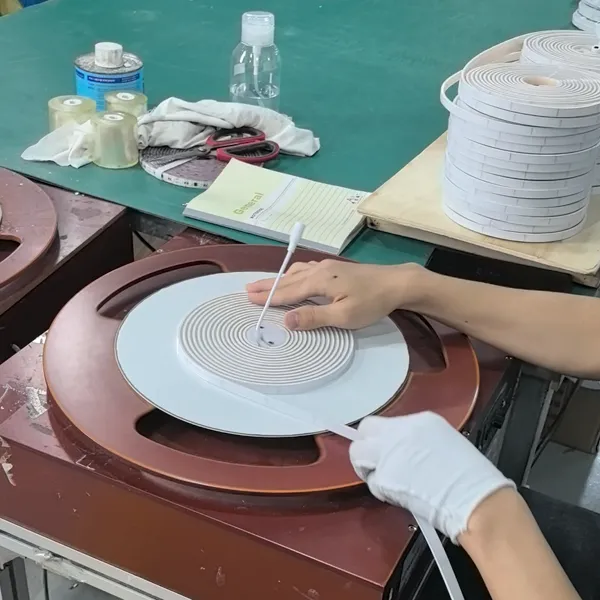
Assembling these multi-component LED neon light strip kits requires intensive, meticulous manual labor, involving precise hand-soldering, finished-goods quality screening, and error-free component kitting. For operations handling heavy daily order flows online or offline, a LED neon light factory’s roster of trained, stable packaging personnel serves as the ultimate barometer for production reliability. Insufficient manual capacity triggers severe bottlenecks—such as missing accessories, damaged box sets, or late-shipment defects—which lead to disastrous marketplace penalties and negative reviews.
OneZero’s Competitive Edge in E-Commerce Kit Fulfillment
As an industry-leading LED neon strip manufacturer, OneZero has deployed a dedicated assembly department composed of 16 full-time, highly proficient manual kitting technicians specializing exclusively in consumer-ready neon kit configurations:
- Scalable Output: Our specialized lines deliver a robust, consistent output of over 2,500 fully kitted retail box sets per day.
- Proven Track Record: We serve as the long-term, trusted OEM/ODM manufacturing engine behind premium sellers on Amazon, eBay, and top-tier Shopify storefronts worldwide.
- Supply Chain Security: This sizable, permanent workforce ensures unwavering quality control, flawless component matching, and razor-sharp lead-time predictability—providing an absolute competitive edge and bulletproof supply chain immunity for B2C marketplace sellers and traditional retailers alike.
4. Criterion 3: OEM/ODM Customization Capability — Tailoring Parameters to Build Your Brand Premium
For large-scale advertising material traders, private-label neon brands establishing market identity, and commercial buyers managing complex project specifications, evaluating a manufacturer’s comprehensive OEM and ODM capabilities is of paramount importance.
As a highly vertical manufacturer with nearly a decade of experience in engineering 6mm advertising-grade LED neon lights, OneZero delivers a comprehensive matrix of customizable technical parameters. Our engineering capabilities are systematically structured to help you forge a differentiated brand wall and flawlessly execute intricate project specifications:
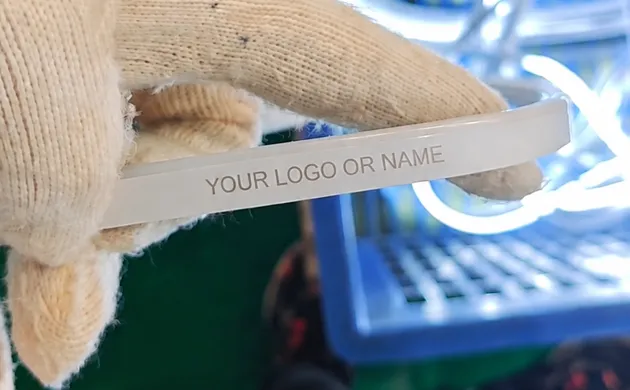
- On-Profile Custom Logo Printing (Anti-Counterfeiting & Brand Identity)
- Bespoke Master Carton Packaging & Brand Consolidation
- Multi-Range Voltage Configurations (Electrical Compatibility)
- Power Rating Customization & Optical Uniformity
- Precision Cutting Unit Customization
Note: If you are looking for supply chain solutions tailored for LED neon sign fabricators or small-scale advertising material traders, please read our companion guide: 4 Genius Tips to Choose a LED Neon Strip Supplier for Sign Makers.
5. Frequently Asked Questions
Need more help? Just click the [WhatsApp button] on the bottom right to chat with us. We’ll be happy to assist you immediately!
6. Conclusion
In the rapidly evolving global signage and e-commerce retail marketplaces, the relationship between large-scale buyers and contract manufacturers has shifted from a transactional purchasing model to a deep, strategic supply chain synergy. Vetting a qualified LED neon strip factory hinges on a procurement team’s ability to look past surface-level vanity metrics—such as total floor area or generic line counts—and rigorously audit three core pillars: manufacturing lineage, concentration of dedicated neon capacity, and the depth of root-cause engineering and customization capabilities.
As systematically illustrated throughout this guide, specialist manufacturers like OneZero—with nearly a decade of vertical tenure, a 100% dedicated neon production layout, and a highly stable manual kitting workforce—root-cause and eliminate systemic bottlenecks such as bulk delays, cross-batch chromaticity drift, missing retail components, and rigid scheduling. A truly premium supplier is not merely an exporter of raw materials; they are the strategic vanguard of your brand reputation and a pressure-release valve for your global supply chain. By prioritizing hard metrics like engineering expertise and dedicated throughput capacity, enterprise-level traders can lock in an absolute delivery advantage and forge an impregnable market moat.
Know someone who needs this? Share via:
7. Call to Action
As a professional manufacturer with 8 years of deep expertise in the neon lighting industry, One Zero LED Lighting Factory is committed to providing a full range of high-quality advertising LED neon flex lighting products.
- Equipped with 6 specialized production lines and comprehensive in-house capabilities from R&D to manufacturing, we can flexibly meet the needs of diverse projects.
- Maintain substantial ready-to-ship inventory across our entire advertising neon light series, enabling fast dispatch within 3–7 days for small to medium orders. This ensures efficient support for urgent projects and allows your plans to proceed with confidence.
Let’s work together to illuminate spaces, ideas, and opportunities with professional products and service.