Quick Summary
- Problem: How to Solve Light Leakage in the Back of Split LED Neon?
- Analysis:
- 1. Light guide effect of transparent acrylic;
- 2. The Anatomy of S-Type LED Strips;
- 3. Wrong FPCB folding operation.
- Solution:
- Option 1: Stop using clear acrylic for LED neon sign backings and switch to opaque, non-conductive backing materials.
- Option 2 (Top Pick): Stop using split LED neon lights and switch to fully encapsulated, co-extruded LED neon lights with 1cm fixed cutting length.
- Result: The rear light leakage issue of LED neon sign is completely resolved at the source, delivering a flawless back profile without wasting extra time or labor. Andy’s custom LED neon sign series achieved a staggering 26% quarterly sales growth in Q3 2024 compared to Q2 2024.
Case Background
- Client Industry: LED Signage Manufacturing
- Client Country: Thailand
- Client Name: Andy
- Product Used: 12V 6MM Split LED Neon Light, Clear Acrylic Board
Note: The client's name has been changed to a pseudonym to maintain strict confidentiality and protect their privacy.
The Challenge
The Pain Point: A stunning front-facing glow is only half the battle. Many signage makers struggle with the "rear light leakage issue of LED neon". Scattered light escaping from the back of an LED neon sign ruins its professional look, especially when mounted on storefront glass.
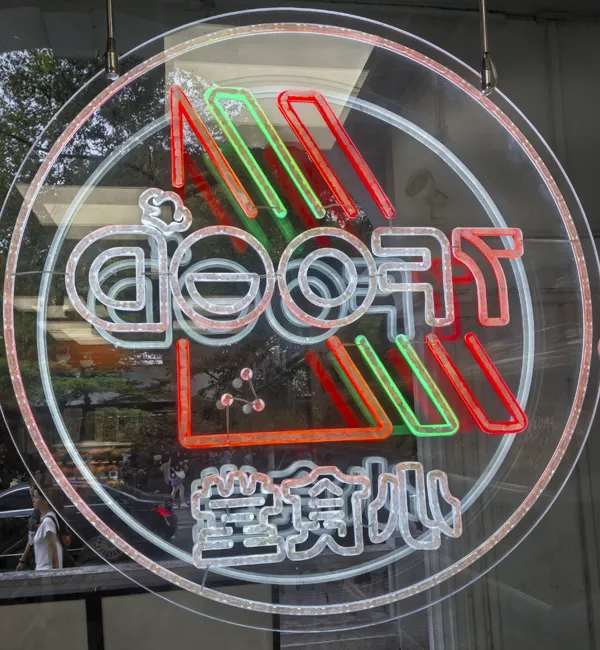
What Happened: Andy, a local LED signage manufacturer from Thailand, recently shared his case feedback with us. By upgrading to Third-Gen Split LED Neon, he successfully lowered his costs and won numerous project bids. However, he recently received a complaint from a restaurant client regarding light leakage from the back of LED neon sign. Andy’s team installed a beautiful split LED neon sign on the restaurant’s front window. From the street, it looked flawless. Inside, however, diners sitting near the window were staring at a chaotic mess of light leakage from the back of LED neon. Because some customers were seated facing the glass directly, the glare was intense and even eye-piercing. Instead of creating a sophisticated dining atmosphere, the messy light back of the signboard compromised the entire dining experience.
Root Cause Analysis
Root Cause 1: The "Light Pipe" Effect of Acrylic Backboards
Andy used high-end transparent acrylic sheets for his sign backboards. While clear PMMA is aesthetically pleasing, its high refractive capabilities actually aggravated the rear light leakage issue of LED neon.
- Root Authority Insight: According to published engineering data on ScienceDirect regarding PMMA (Polymethyl Methacrylate) properties, clear acrylic possesses an exceptionally high light transmission rate of approximately 92%.
- The Effect: Clear acrylic acts exactly like a fiber-optic light guide. Instead of letting stray light dissipate, it captures the rear emission from the split LED neon strip and bounces it heavily around the board's structural edges and back profile, creating a messy, unshielded glare.
Root Cause 2: The Anatomy of S-Type LED Strips and PCB Transmittance
Split LED neon relies on a silicone jacket to cover the top, leaving the back of the S-Type LED strip fully exposed. Because these strips must remain ultra-flexible to bend seamlessly around curved and tight carving channels, they typically utilize single-sided FPCBs (Flexible Printed Circuit Boards).
- Technical Analysis: The back of FPCB's ability to block light inherently depends on its manufacturing substrate and density. There are three common types of S-type single-sided FPCBs utilized across the industry:
- S-type Electroplated Single-Sided FPCB (Highest Quality)
- S-type Perforated Single-Sided FPCB
- S-type Die-cut Single-Sided FPCB (Lowest Quality)
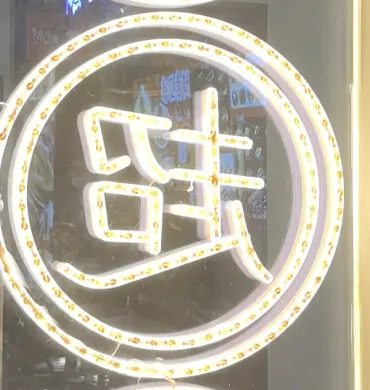
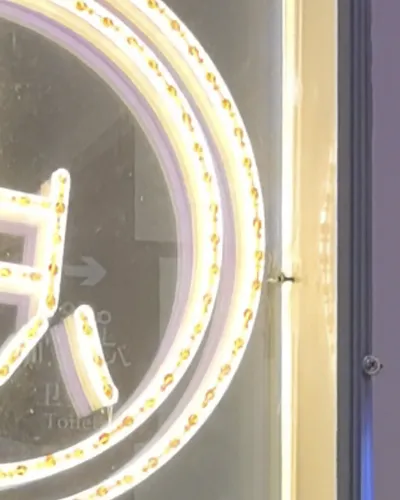
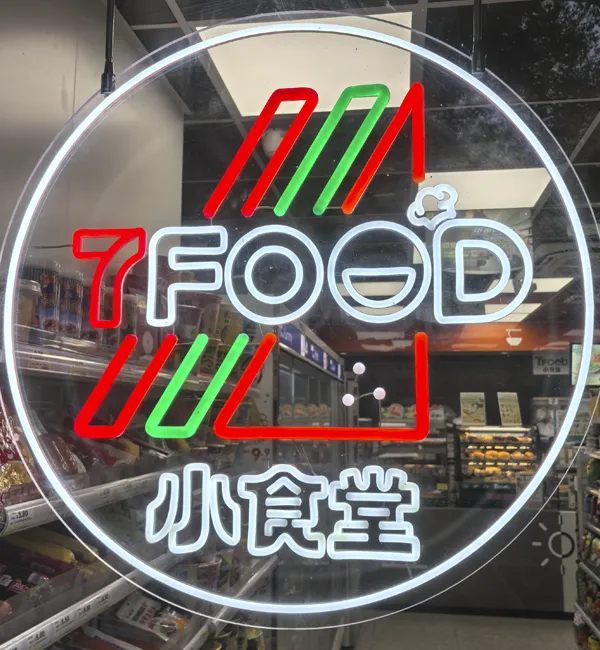
- The Structural Flaw: At our ONE ZERO factory, we exclusively utilize S-type Electroplated Single-Sided FPCBs for our S-type LED strips to ensure superior circuit density and durability. However, even high-quality single-sided FPCBs must remain ultra-thin to retain their flexing capabilities. This inherent thinness means they lack a specialized blackout or copper-shielding layer, allowing intense light to bleed directly through the rear of the strip and creating an unsightly light leakage from the back of LED neon. That being said, a premium electroplated single-sided FPCB experiences a much weaker light transmittance from the back, providing a relatively comfortable and subdued visual experience. You can see the actual performance of the excellent S-type split LED neon on the 7-Eleven sign. The right (or below on phone) image shows its limited rear light leakage issue of LED neon. Swipe left/right to see the back vs. front comparison of split LED neon.
Root Cause 3: The Risks of Folding FPCBs
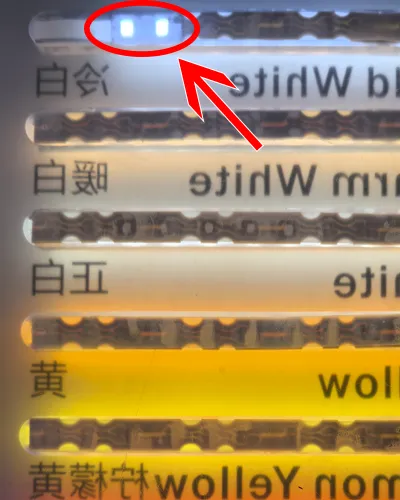
The "eye-piercing" glare experienced by the restaurant's customers is typically caused by a widespread yet highly improper assembly practice. When an S-type LED strip runs slightly longer than the predefined routing channel, many assemblers—often influenced by quick DIY tutorials on Facebook and Instagram—simply fold the excess strip back onto itself (PCB to PCB).
The Consequences of This Risks of Folding FPCBs:
- Visual Glare: Folding the PCB forces the LED chips in that section to face directly toward the backboard. If you are utilizing a transparent acrylic sheet, you are essentially pointing an unshielded flashlight straight into the eyes of anyone sitting behind the sign. This raw, direct exposure is exactly why customers complain about blinding glare.
- Fire Hazard (The Critical Threat): This is the most dangerous risk of all. The U.S. Department of Energy (DOE) emphasizes that thermal management is the single most critical factor in LED safety and longevity. Bending and layering the PCB onto itself triggers severe thermal accumulation. The concentrated heat locked within the folded section quickly exceeds the components' maximum operating temperatures. This structural stress leads to accelerated light decay, chromaticity shifts (color fading), localized dark spots (LED failure). In extreme cases, catastrophic circuit overheating can lead to a fire.
Our Solution
To solve light leakage in the back of LED neon and maximize production efficiency, we recommend addressing each specific root cause with the following industry-proven materials and technical workflows:
- Material-Level Solutions (Addressing Acrylic "Light Pipe" & FPCB Rear Transmittance)
- The Baseline Approach (Material Upgrade): For glass window-mounted signs where the back remains fully visible, we strongly recommend that manufacturers switch from clear acrylic to PVC Foam Board (Forex)or other opaque, non-conductive substrates. These materials feature a light transmission rate of near 0%, ensuring 100% of the light stays focused exactly where it belongs—on the front. However, the main drawback of this method is market preference: the vast majority of international clients still favor clear acrylic backboards, as they deliver a far more premium, floating aesthetic that opaque materials cannot replicate.
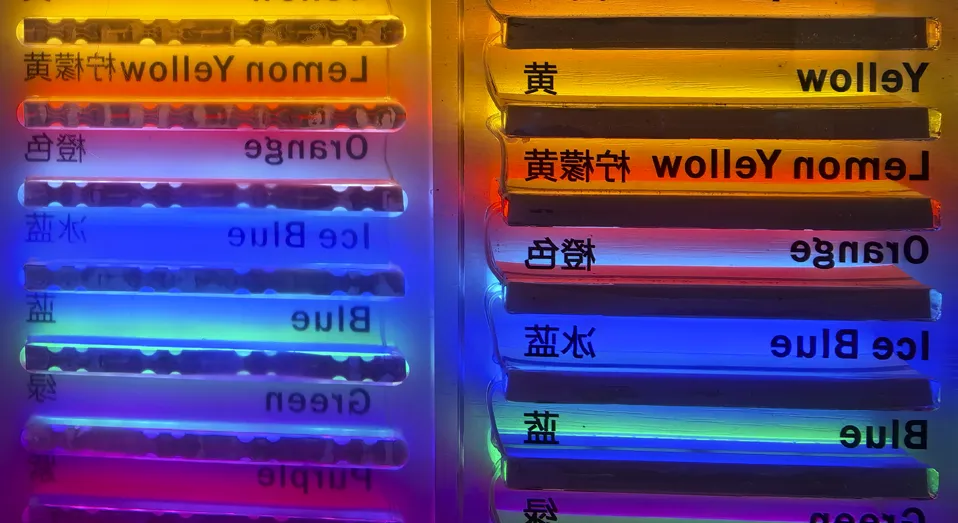
- The Premium Upgrade (🎯 Top Pick): If your clients insist on clear acrylic backboards to maintain a high-end, transparent "floating" aesthetic, split neon lights are no longer viable. Instead, we recommend upgrading to our All-In-One Co-Extruded LED Neon Series. This series fully encapsulates the internal LED strip—both front and back—within a seamless silicone extrusion. This integrated layer creates a permanent "blackout" effect on the rear, completely solve light leakage in the back of LED neon while keeping the frontal glow incredibly vibrant. The following image shows a back view comparison of split LED neon (left) and co-extrusion LED neon (right):
- Process-Level Solutions (Eliminating Risks of Folding FPCBs)
The Professional Workflow (Precision Over Remediation): To completely avoid the risks of folding FPCBs and guarantee a pristine back profile, manufacturers should transition to Fixed Cutting Length Extruded LED Neon. We offer two ultra-precision cutting standards:
- Extruded 06*12mm LED Neon with fixed 2.5cm cut points
- Extruded 06*12mm LED Neon with ultra-short 1cm cut points
How to Implement This in Your Design: When drafting your CNC engraving files (CDR/AI/CAD), always calibrate your tool path lengths to perfectly match the minimum cutting unit of your neon strip. For instance, if you are using our 1cm Fixed Cutting Length Extruded LED Neon, ensure your groove paths are exact multiples of 1cm (e.g., 12cm, 15cm). This digital precision ensures the neon strip fits flawlessly from end to end—requiring zero folding, zero stretching, and leaving zero rear glare.
Technical Notice on S-Type Strips: While S-type strips feature fixed 2.5cm cut points on paper, their actual physical length changes unpredictably when bent or folded. If your production line is currently committed to S-type strips, do not attempt to fold or squeeze the extra length into the groove. Instead, carefully adjust the localized bending radius of the strip to absorb the excess length within the channel. Although this manual micro-adjustment requires more labor time, it prevents damage and protects the lifespan of the strip.
Result & Feedback
After consulting with our technical team, Andy successfully acted on our product recommendations by segmenting his manufacturing strategy based on his clients' specific aesthetic and budget requirements:
- For Budget-Conscious Projects: For clients without high demands for absolute back-shading, Andy upgraded to our Premium Electroplated S-Type LED Strips. This material upgrade successfully subdued and minimized rear light bleed to a comfortable level. Simultaneously, he enforced strict workshop training to ensure technicians implemented the correct assembly behaviors, successfully regulating internal heat dissipation and protecting the strips from overheating.
- For Premium, High-End Projects: For clients demanding a flawless visual presentation, Andy completely transitioned to our flagship product: Fixed-Length Extruded LED Neon with 1cm Minimum Cutting Length. This high-precision, fully encapsulated silicone solution provided perfectly predictable path fitting, generating zero rear glare while keeping the front glow exceptionally vibrant.
- The Performance Boost: The output of these perfectly lit, premium LED neon signs yielded immediate commercial success. According to the direct feedback loop shared by Andy, after implementing these manufacturing overhauls, his custom LED neon sign series achieved a staggering 26% quarterly sales growth in Q3 2024 compared to Q2 2024. Furthermore, this quality leap sparked a massive wave of organic word-of-mouth referrals, with numerous high-value business clients bringing in repeat referral contracts.
